Chasing the Island: How Windsurfers Everywhere Are Trying to Bottle What Maui's Got
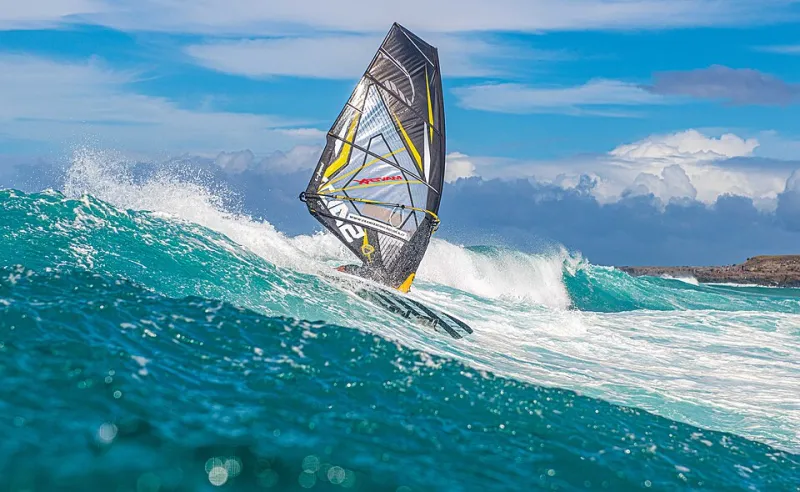
Photo: windsurfer riding ocean waves tropical destination aerial view, via francaismeme.com
There's a phrase you hear a lot in windsurfing circles, usually spoken with a mix of hope and resignation: "It's kind of like Maui." You'll catch it at a campsite on the Oregon coast, on a dock in Aruba, in a gear shop outside Cape Town. Somebody just got back from a new spot, their eyes are still lit up, and that's the comparison they reach for. It's the highest compliment the sport has. And almost nobody means it literally.
Because here's the thing — nothing is really like Maui. And yet the pursuit of something close has quietly become one of windsurfing's most compelling subcultures.
The Blueprint Nobody Can Fully Copy
To understand why riders keep chasing the feeling, you have to first understand what they're actually chasing. Maui's magic isn't one thing — it's a collision of things that, by any rational measure, shouldn't all show up in the same place.
The trade winds that funnel through the island's central valley create a reliable, powered-up flow that arrives with an almost mechanical consistency through the summer months. But unlike purely flat-water wind venues, Maui pairs that air with open-ocean swell from the North Pacific. The result is a riding environment where you can be fully powered on a sail, launching off real waves, in water warm enough to ride in boardshorts. That combination — power, swell, warmth, and consistency — is genuinely rare on a global scale.
Then there's the culture layer, which might actually be the hardest thing to replicate. Maui's Ho'okipa Beach has hosted so many pivotal moments in the sport's history that simply being there carries a kind of gravity. You're not just riding waves; you're riding in the same water where the sport's defining techniques were developed, tested, and refined over decades. That context changes how people approach their riding.
The Gorge Gets Closest — But Only Partway
If you ask American windsurfers where they go when they can't get to Maui, the Columbia River Gorge comes up more than anywhere else. Hood River, Oregon has built a legitimate windsurfing economy around its reliable thermal winds and the broad, choppy fetch of the river. On a summer afternoon, the Gorge can deliver the kind of powered, high-wind blasting that gives riders legitimate skill development.
What it doesn't have is swell. The Gorge is a river, and while chop can get surprisingly rowdy, it's not ocean wave riding. Riders who've spent serious time at both spots describe the Gorge as an incredible training ground for raw power and speed — a place where you can sharpen your upwind game and test new gear configurations — but the wave-riding dimension that defines Maui's highest expression just isn't there.
Gear designers have actually used this distinction productively. Equipment built to perform in the Gorge's choppy, powered conditions tends to get stress-tested in ways that flat-water venues never demand, but the feedback loop is different from what Maui's wave sailing environment produces. The two locations, taken together, have historically pushed development in complementary directions.
Caribbean Variations and What They Teach
Head further south and the conversation shifts again. Spots like Cabarete in the Dominican Republic and Le Morne in Mauritius offer warm water, consistent trade winds, and genuine wave potential. Riders who've built their skills in the Caribbean often talk about a different kind of education — one centered on reading lighter, more variable wind and developing a smoother, more patient style.
That contrast is revealing. Maui's wind tends to reward aggression. You can muscle through mistakes because the power is almost always there. In spots where the breeze is softer or more shifty, riders have to develop better timing and cleaner technique just to stay on the water. Several coaches who split time between Maui and Caribbean locations have noted that their students who trained elsewhere first often arrive on Maui with technical foundations that hold up better under pressure.
So the search for a Maui substitute, even when it falls short on raw conditions, keeps producing real windsurfers.
The Gear Angle: Building for Everywhere by Studying One Place
Equipment designers pay close attention to this global search, and for good reason. When riders attempt to recreate Maui-style riding in conditions that are fundamentally different, the gear gets pushed in unexpected directions. A sail tuned for Ho'okipa's powerful, consistent trades will behave very differently on a gusty afternoon in Tarifa, Spain, or in the light-and-variable conditions you sometimes find off the Florida coast.
The feedback that comes back from riders chasing the Maui experience at spots around the world has historically informed how equipment gets designed for versatility. The goal shifts from building the perfect Maui quiver to building gear that can deliver a version of that feeling across a wider range of conditions. It's a harder engineering problem, and it's one that the pursuit of the "Maui effect" keeps putting on the table.
Why the Original Stays Irreplaceable
For all the searching, the honest answer from riders who've traveled extensively is that Maui's specific combination remains genuinely unique. Part of it is geographic — the way the island's topography channels and accelerates wind while simultaneously sitting in the path of quality Pacific swell is a coincidence of geology that doesn't repeat itself cleanly anywhere else.
But a bigger part of it might be historical and human. The density of knowledge on that island — the coaches, the longtime locals, the visiting pros, the institutional memory baked into every session at Ho'okipa — creates a learning environment that no amount of good wind can replicate on its own. You can find similar wind elsewhere. You can't find that accumulated culture.
Riders who make their first trip to Maui after years of riding other spots almost universally describe the experience as recalibrating. Not because everything they learned elsewhere was wrong, but because they finally understand the reference point everyone in the sport has been talking about.
The Value of the Chase
Here's the twist, though: the search for Maui's magic, even when it comes up short, might be one of the best things that's ever happened to windsurfing's global spread. Every rider who sets up at a new spot trying to find that feeling is exploring, mapping, and building community somewhere that might not have had much of a windsurfing scene otherwise. Spots in the Pacific Northwest, the Gulf Coast, the Great Lakes — they've all been developed, at least in part, by people who were looking for something and found something different but worthwhile.
The island, in that sense, functions as a compass. It gives the sport a true north. And as long as riders keep pointing themselves toward it — whether they're on Maui or just chasing the feeling somewhere new — the culture stays alive and keeps moving.
That's probably the deepest thing Maui has given windsurfing. Not just a great place to ride, but a standard worth chasing forever.