Old Boards, New Life: Inside the Quiet World of Neil Pryde Restoration
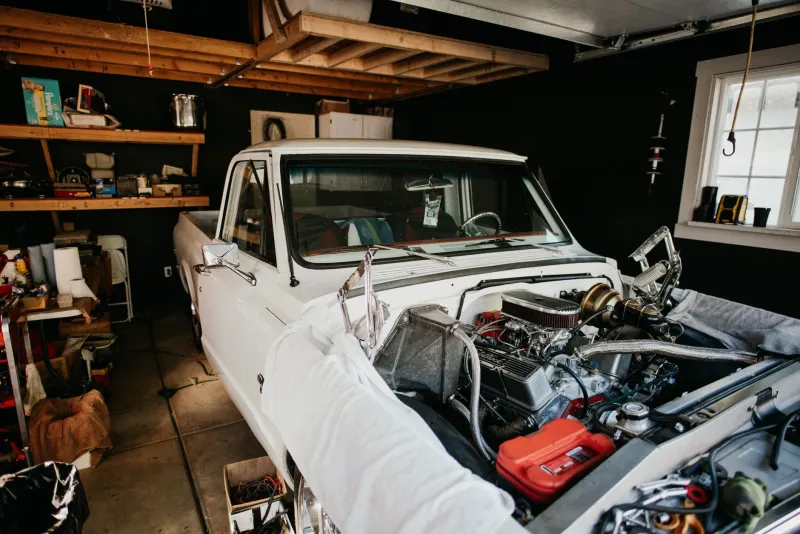
In a garage in Oceanside, California, there's a 1989 Neil Pryde slalom board hanging from the ceiling on padded straps, mid-restoration. The deck has been stripped back to bare fiberglass, a section of delaminated foam has been carefully excised and replaced, and the original fin box—cracked along one edge from a decade of sitting in someone's storage unit—is waiting for a specialist to decide whether it can be saved or needs to come out entirely.
The man doing this work, Tom Bellamy, is not a professional board builder. He's an HVAC technician who's been windsurfing since the late eighties and restoring boards as a side hustle for about twelve years. He charges what he calls "honest rates," has a three-month waiting list, and turns down more work than he accepts.
He is not an anomaly.
A Community Built on Epoxy and Patience
Across the United States—from the Pacific Northwest to the Great Lakes to the Florida coast—there's a loosely connected network of people doing exactly what Bellamy does. Some are retired shapers who never lost the itch. Some are self-taught hobbyists who started by fixing their own boards and discovered they had a talent for it. Some are small surf and windsurf shops that added restoration to their service menu when they realized how much demand existed.
What unites them is a shared conviction: a well-built vintage Neil Pryde board, properly restored, is worth far more than its age suggests. And a growing number of collectors and budget-conscious riders are agreeing with them.
The economics are straightforward. A quality used Pryde board in rough-but-salvageable condition might sell for a few hundred dollars. A professional restoration—fixing delamination, refinishing the deck, replacing worn hardware, and updating the fin system to accept modern fins—runs anywhere from $300 to over $1,000 depending on the scope of work. The finished board can then perform comparably to new boards costing two or three times as much. For riders who know what they're looking for, it's not a hard calculation.
The Craft of Getting It Right
Restoring a vintage board is not the same as fixing a ding. Anyone with a repair kit from a surf shop can fill a pressure crack. Real restoration work requires understanding how the original board was built and making decisions that respect—rather than fight—that construction.
Delamination is the most common issue on older boards, and also the most misunderstood. When the fiberglass skin separates from the foam core, the temptation is to inject resin and clamp it back down. Sometimes that works. Often it doesn't, because the underlying cause—water intrusion that has compromised the foam itself—hasn't been addressed. Skilled restorers learn to read delamination before they touch it: tapping the deck to map the hollow areas, using moisture meters to assess foam saturation, and making honest judgments about whether a section needs to be cut out and rebuilt from scratch.
Deck refinishing is its own discipline. Original gel coat on boards from the eighties and nineties has usually oxidized and crazes over time, and getting it back to something resembling its original appearance requires progressive sanding, careful color matching, and a clear coat application that doesn't add meaningful weight. Bellamy has a collection of original Neil Pryde color samples—some sourced from other restorers, some carefully documented from boards he's worked on—that he uses as reference points. "The original colors had a specific quality to them," he says. "You can get close with modern materials, but you have to know what you're trying to match."
Hardware upgrades require their own judgment calls. Mast track systems from older boards are often incompatible with modern mast base standards, and updating them is one of the most requested modifications. Done well, it makes a vintage board fully functional with current equipment. Done carelessly, it can compromise the structural integrity of the hull. The best restorers approach these modifications the way a good mechanic approaches an older car: respecting the original engineering while making targeted updates that improve usability without erasing character.
Why Collectors Are Paying Attention
The collector side of this world operates a little differently from the performance rider side. For serious collectors, originality matters in ways that complicate the restoration conversation. A board that's been heavily modified—even expertly—is worth less to a purist than one that retains its original hardware and finish, even if the original finish is faded and the hardware is outdated.
This creates an interesting split in the market. Performance-focused buyers want boards that ride well and are compatible with modern gear. Collectors want boards that are historically accurate. Restorers who serve both audiences have to be clear about which mode they're operating in from the first conversation.
Lisa Harmon, who runs a small restoration operation out of her shop near Lake Michigan, describes navigating this regularly. "I've had people bring me boards and say they want them 'restored,' but what they actually want is different things. One guy wanted his board to look exactly like the day it was made. Another guy wanted it to look like the day it was made but with a modern mast track and updated fin boxes. Those are very different projects, and you have to understand which one you're doing before you start."
The Deeper Argument
There's a cultural dimension to this repair movement that goes beyond economics or nostalgia. The windsurfing industry, like most action sports industries, has historically operated on a newer-is-better logic. Each season brings updated shapes, new materials, revised graphics, and implicit pressure to upgrade. The restoration community is a quiet but persistent argument against that logic.
It says: the boards that shaped this sport were built with real craft and real intention, and they deserve to be ridden, not discarded. It says: a skilled person with the right materials can extend the life of a well-made object indefinitely. It says: sometimes the best board for you already exists, and it's sitting in someone's garage waiting to be found.
For the Neil Pryde community specifically, this argument carries particular weight. Pryde's approach to board building was always about doing things properly—about the quality of materials, the integrity of construction, the honesty of design. Restoration culture honors that ethos in a way that simply buying a new board cannot.
Tom Bellamy finishes his thought about the board hanging in his garage. "I'll put maybe forty hours into this thing before it's done. And when it's done, someone's going to ride it and feel exactly what this board was designed to feel like. That's worth doing. That's worth doing right."
Hard to argue with that.