From the Tour to the Shore: How Retired Pros Are Shaping Maui's Next Wave of Windsurfing Talent
Photo: P Flannagan, CC BY-SA 2.0, via Wikimedia Commons
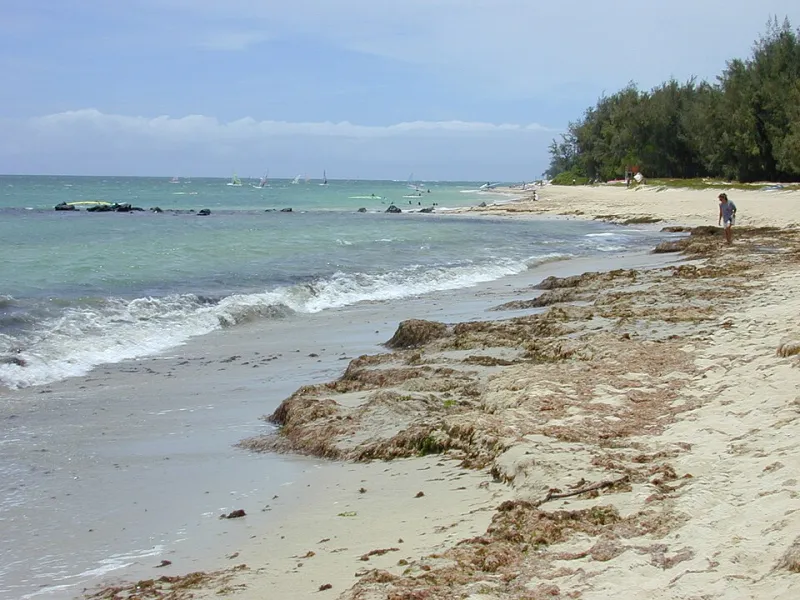
There's a moment on any given weekday morning at Kanaha Beach Park when the wind picks up just right and you'll notice something that doesn't quite fit the usual tourist snapshot of Maui. A weathered instructor — maybe someone whose name once graced the podium at a PWA event — is standing knee-deep in the shallows, arms outstretched, mimicking a harness transition while a teenager in a borrowed wetsuit watches with the intensity of someone memorizing a map. No sponsorship banners. No cameras. Just knowledge moving from one generation to the next.
This is the quiet revolution happening all over Maui right now, and it's every bit as significant as anything that's ever gone down at Ho'okipa.
Why the Pros Stayed
Maui has a way of keeping people. Ask any former professional windsurfer who came here for a season and never quite left, and they'll give you a version of the same answer: the wind is consistent, the community is tight, and there's nowhere else on Earth that offers quite the same combination of world-class conditions and genuine windsurfing culture.
But there's another reason the retired pros stick around, and it's less about the trade winds and more about purpose. After years of chasing ranking points across Europe, Asia, and the Americas, many former competitors find that what they miss most isn't the competition itself — it's the daily immersion in the craft. Teaching, it turns out, scratches that itch in a way that nothing else does.
"When you're on tour, you're so focused on your own performance that you almost stop seeing the sport from the outside," explains one longtime Maui-based instructor who competed at the world level through the late '90s and early 2000s. "Coming back to basics with a student — watching someone feel the power in a sail for the first time — it reconnects you to why you fell in love with it in the first place."
The Informal Network That Actually Works
What makes Maui's mentorship scene genuinely special isn't any single school or structured program. It's the informal web of relationships that has grown organically over decades, connecting veteran riders to promising newcomers through word of mouth, beach introductions, and the kind of casual generosity that defines tight-knit athletic communities.
A young windsurfer visiting from the mainland might get a tip at a gear shop that leads to a conversation with a local legend at the beach, which turns into a standing invitation to session together on Tuesday and Thursday mornings. That's not unusual here. That's just how Maui works.
More structured programs have emerged alongside this organic network, though. Several retired pros have formalized their coaching into small-group clinics, week-long intensives, and even multi-month mentorship arrangements for serious young competitors. These programs draw students from across the US and beyond, with participants ranging from college-aged athletes looking to break into competitive windsurfing to dedicated recreational riders who simply want to level up their technique under expert eyes.
The curriculum, if you can call it that, tends to blend the technical with the philosophical. Instructors don't just teach harness lines and foot strap positioning — they teach students how to read Ho'okipa's notoriously shifty conditions, how to manage fear in heavy surf, and how to develop the kind of patient, iterative mindset that separates good windsurfers from great ones.
What the Students Are Learning That You Can't Find Online
For all the tutorial videos and technique breakdowns available on YouTube, the veterans coaching on Maui are quick to point out what digital content simply cannot deliver: real-time feedback in real conditions, delivered by someone who has personally navigated every variable the ocean can throw at a rider.
"You can watch a thousand videos of a perfect jibe," one instructor noted during a recent coaching session at Spreckelsville. "But until someone watches you try it and tells you exactly where your weight shifted wrong, you're just guessing."
Students consistently point to this personalized, in-the-moment coaching as the transformative element of their Maui experience. One 22-year-old from California who spent three weeks training with a former world championship finalist described the experience as compressing years of self-directed learning into a matter of days. "He could see things in my riding that I had no idea were happening. Things that no camera angle would have caught."
There's also an intangible cultural transmission happening. The retired pros aren't just teaching technique — they're passing down a philosophy of the sport that traces back through decades of Maui windsurfing history, through the Neil Pryde-era equipment revolutions, through the golden age of wave sailing, through every innovation that shaped the sport into what it is today. Students leave not just with better skills but with a richer understanding of where windsurfing came from and what it means to be part of that lineage.
Maui as the World's Best Finishing School
Ask coaches and athletes around the US where a serious young windsurfer should go to truly accelerate their development, and the answer is almost always the same. Maui isn't just a great place to train — it's the place, in the way that certain cities are the only logical destination for aspiring jazz musicians or aspiring filmmakers.
The conditions alone justify the trip. Maui's North Shore delivers a rotating menu of challenges — from the powerful shore break at Ho'okipa to the long, open-ocean runs off Kanaha — that force riders to develop versatility in a way that training in a single consistent environment simply doesn't. Add in the concentration of elite-level coaching talent, the competitive community of local riders pushing each other to improve, and the cultural weight of training in a place where windsurfing history was literally made, and you have something that can't be replicated anywhere else.
For the retired pros doing the teaching, there's also something deeply meaningful about being part of that tradition. Neil Pryde's influence on the sport wasn't just about building better equipment — it was about building a community of riders who were serious about craft, serious about progression, and serious about sharing what they knew. The coaches working the beaches of Maui today are, in their own way, carrying that same spirit forward.
The Next Chapter Is Already Underway
If you spend enough time on Maui's water, you start to see the throughlines. The teenager fumbling through her first beach start at Kanaha today might be the same person charging Ho'okipa in a few years, and eventually — if the pattern holds — she might be the one standing knee-deep in the shallows, arms outstretched, passing it all along to someone else.
That's the real comeback blueprint. Not a return to competition, but a return to what made the sport worth competing in at all. And Maui, as always, is right at the center of it.