Wind School: The Unwritten Curriculum Passed Down on Maui's Water
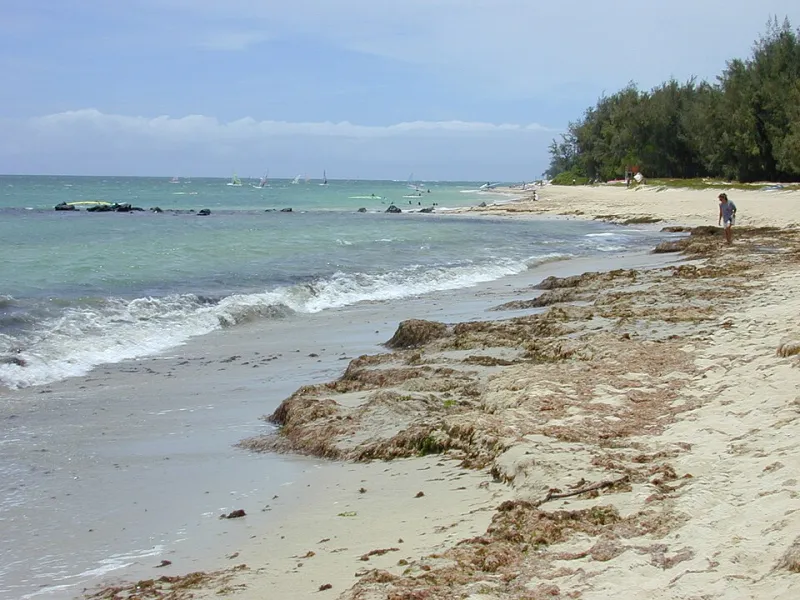
Photo: Forest and Kim Starr, CC BY 3.0 us, via Wikimedia Commons
If you want to understand how Maui's windsurfing community actually works, forget the competition results for a minute. Forget the gear reviews and the highlight reels. The real story happens in the parking lot at Ho'okipa at six in the morning, when a rider who has been sailing these waters for thirty years points at the horizon and says something like, "See how the clouds are stacking over Haleakala? That's going to change everything by noon." And the person next to them, maybe two seasons into their windsurfing life, files that observation somewhere permanent.
This is Maui's mentorship culture. It doesn't have a formal structure. There's no registration, no curriculum, no certification. But it is, by most accounts from people who have come up through it, among the most effective educational systems in any sport anywhere in the country.
"I learned more in my first six months on Maui from watching and listening than I had in three years of sailing anywhere else," says Priya Nakamura, a competitive wave sailor from San Diego who relocated to the island five years ago. "And most of it wasn't even direct instruction. It was just being around people who had been doing this for decades and paying attention."
The Knowledge That Doesn't Live Online
Maui's wind and wave environment is famously complex. The island's topography — the massive volcanic mass of Haleakala dominating the east side, the West Maui Mountains funneling trade winds into specific corridors — creates conditions that shift in ways that can feel random until you've watched them long enough to see the patterns.
Veteran sailors know those patterns the way they know their own names. They know that a certain kind of morning cloud formation over the summit usually means the trades will clock slightly north by early afternoon, changing the angle at Ho'okipa enough to matter. They know which months bring the swells that make Lanes almost unsailable for anyone who hasn't ridden it in those conditions before. They know when to go and, crucially, when to stay on shore.
"That's the stuff Neil Pryde and the legends of that era were working with," says longtime Maui sailor and informal mentor Ray Teshima. "They didn't have weather apps. They had observation and experience and each other. They'd debrief every session. What did you see out there? What did the water tell you? That culture of sharing information — it's still alive here."
Teshima has been sailing Ho'okipa for over two decades and estimates he has mentored, informally, somewhere between thirty and forty riders over the years. He doesn't think of it as teaching, exactly. "It's more like I'm showing someone how to pay attention. The ocean does the actual teaching."
Mentor-Mentee Stories from the Water
Ask around in Maui's windsurfing community and the mentor-mentee stories come quickly, and they tend to share a similar shape: an experienced rider noticing something in a newer sailor's approach, offering a word or a gesture, and something clicking that no amount of solo practice had produced.
For Marcus Delgado, who grew up in landlocked Colorado and came to Maui on a surf trip that turned into a permanent relocation, the turning point came during a session at Kanaha. He'd been struggling with his jibing in choppier conditions for months, technically executing the move but losing momentum and ending up sideways more often than not.
"This older guy, been sailing since before I was born, watches me for maybe twenty minutes and then just paddles over," Delgado recalls. "He doesn't say anything about my footwork or my hands. He says, 'You're fighting the water. Stop trying to complete the jibe and start trying to stay in the conversation with what the water is doing.' That sounds abstract, but something about the way he said it completely changed how I approached it."
Within a week, Delgado's jibing had transformed. The technical execution hadn't changed much. His relationship to the water had.
Nakamura's breakthrough came differently — through a mentor who taught her to read swell intervals from the cliff at Ho'okipa before ever going in. "She'd stand there with me for an hour sometimes, just watching. Counting seconds between sets. Pointing out where the peaks were forming, where they weren't. She'd say, 'You have to know the ocean's schedule before you try to keep an appointment with it.' That's become the foundation of everything I do out there."
Why Maui Specifically Produces This Culture
Mentorship happens in windsurfing communities around the world, but the people who have sailed multiple locations consistently describe Maui's version as something distinct. Part of it is the concentration of talent — the island has, at any given time, an unusually high density of world-class riders for its geographic size. But part of it is something harder to quantify, a community ethos that traces back to the early days when the sport was being invented here and the only way to get better was to learn from whoever was a step ahead of you.
"In the '80s, everyone was figuring it out together," says Teshima. "Nobody had all the answers. Neil Pryde and the people around him were running experiments constantly. That collaborative instinct got baked into the culture. You share what you know because someone shared with you, and because the water out there is serious enough that it pays to have people looking out for each other."
That last part matters more than it might sound. Ho'okipa and the island's other premier spots are not beginner-friendly environments. The mentorship culture here isn't just about improving performance — it's also, in a real sense, about safety. Experienced riders passing down knowledge about local hazards, current patterns, and how quickly conditions can deteriorate aren't just being generous. They're helping maintain a community where people can push their limits without unnecessary risk.
Keeping the Competitive Edge Sharp
The informal school of Maui's water has produced more than its share of elite competitors, and the veterans who mentor the next generation are clear-eyed about that part of the equation too. The goal isn't just to produce well-rounded ocean readers — it's to develop riders who can compete at the highest level when they choose to.
"Reading conditions is the foundation," says Nakamura, who now mentors newer arrivals herself. "But once you have that, everything else — your technique, your tactics in competition, your ability to adapt mid-session — it all gets sharper. The riders who come up through this kind of mentorship have an edge that's hard to replicate any other way."
That edge, passed down from generation to generation on these same waters, is maybe the most enduring part of what Neil Pryde's era built here. Not just the equipment, not just the technique, but a way of learning — patient, observational, collaborative — that keeps producing world-class riders long after any single legend has left the water.