Riding Without Permission: The Women Who Took Maui's Waves and Changed Windsurfing Forever

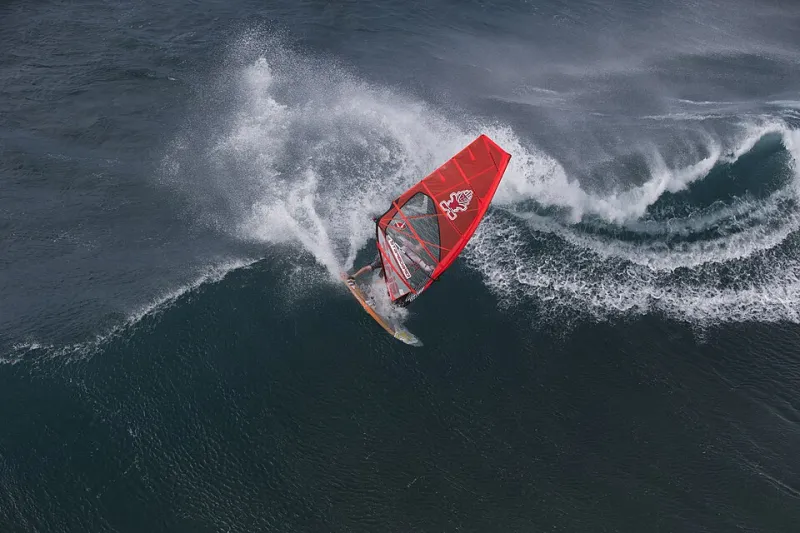
Photo: female windsurfer Maui Hawaii waves action sport, via img.freepik.com
Maui has always had a way of sorting people out. The trades don't care how much you paid for your gear, and Ho'okipa's reef doesn't make exceptions for anyone's ego. That brutal honesty is part of what makes the island's water sports culture so authentic — and it's also what made it the perfect stage for a group of women who refused to accept that the sport's elite tier wasn't meant for them.
Long before gender equity in action sports became a mainstream conversation, female windsurfers were logging sessions at Kanaha and Ho'okipa, pushing into the same swells, dealing with the same wipeouts, and developing the same hard-won skills as anyone else on the water. The difference was that they often did it with less recognition, smaller sponsorships, and the low-grade friction of an industry that hadn't quite figured out how to take them seriously yet.
This is a story about the women who showed up anyway.
The Early Days at Ho'okipa
Ho'okipa Beach Park sits on Maui's north shore like a proving ground. The wave breaks with authority, the wind is consistent and frequently violent, and the locals — regardless of gender — have always maintained high standards for who earns respect out there. In that sense, Ho'okipa was actually more meritocratic than the industry surrounding it.
In the late 1970s and through the 1980s, as windsurfing exploded from a niche curiosity into a genuine global phenomenon, a handful of women were right there in the middle of it. They weren't separate from the Neil Pryde-influenced culture of innovation and performance that was defining the sport — they were part of it, riding the same experimental equipment, contributing feedback, and in some cases becoming the most technically accomplished riders on the island.
Angela Cochran, who came to Maui from the US mainland in the early 1980s, recalls that the water itself was never the obstacle. "Ho'okipa doesn't discriminate," she has said in interviews over the years. "It just asks whether you can handle it. The barriers were always on land — in the magazines, at the sponsor meetings, in whose name ended up on the equipment."
Robby Naish's Shadow Had Women in It
The dominant narrative of Maui windsurfing has long been written around male champions, and that's a distortion worth correcting. The same training environment that produced legendary male competitors was also producing elite female athletes — women who, in many cases, were pushing the technical limits of the sport just as aggressively.
Babette Kröger, a German-born rider who based herself on Maui during the sport's competitive peak, became one of the most decorated female windsurfers in history during the late 1980s and 1990s. Her technical precision in wave riding — the kind of riding that Maui's conditions demand — earned deep respect from the competitive community even as the prize money gap between men's and women's divisions remained embarrassingly wide.
American rider Pam Burridge, who crossed between surfing and windsurfing in the Maui scene, helped demonstrate that female athletes could build careers on the water's own terms, not just as a secondary market for the industry to acknowledge occasionally.
What united these women wasn't a shared complaint — it was a shared commitment to excellence in a place where excellence was the only currency that mattered.
Breaking the Sponsorship Ceiling
If the water was the great equalizer, the business side of windsurfing was where inequality lived most openly. Equipment sponsorships, magazine coverage, and event prize money all reflected an industry assumption that the core audience was male and that female athletes were a secondary consideration.
The women who navigated this era did so with a combination of persistence and pragmatism. Some leveraged their Maui connections to build relationships with brands that were willing to look at performance data rather than demographic assumptions. Others used their profiles in the community — built through years of visible, respected riding — to push for better representation in the media coverage that shaped public perception of the sport.
The needle moved slowly. But it moved.
By the mid-1990s, women's divisions at major competitions were better funded, better covered, and drawing more competitive depth. That shift didn't happen in a vacuum — it was the direct result of women who had established undeniable credibility through years of performance on some of the most demanding water in the world.
What the Next Generation Inherited
Spend time at Kanaha on a good trade wind day and you'll see the legacy in real time. Women make up a visible, active part of the Maui windsurfing community — beginners working through their water starts in the shallower sections, intermediate riders building their jibes, experienced locals launching into the chop with the casual confidence of people who've been doing this for years.
That wasn't inevitable. It was built.
Instructors like those at Maui's established windsurfing schools frequently cite the visibility of female role models as one of the key factors in bringing new women into the sport. When the image of windsurfing at its highest level includes women ripping at Ho'okipa, the barrier to entry feels lower for the beginner standing on the beach trying to decide whether this sport is for her.
The pioneers who established that visibility — who showed up without permission and performed at a level that couldn't be ignored — created that opening.
The Culture They Helped Build
Neil Pryde's legacy on Maui is inseparable from the community that formed around the equipment, the conditions, and the shared pursuit of performance. That community was never exclusively male, even when the industry's attention suggested otherwise.
The women who came up through Maui's windsurfing scene in its formative decades contributed to the sport's culture in ways that extended beyond competition results. They helped establish that the water's welcome wasn't conditional on gender — that if you put in the work, learned to read Ho'okipa's moods, and showed up consistently enough to earn your place, the community would recognize it.
That ethos, as much as any specific equipment innovation or competitive result, is part of what makes Maui's windsurfing culture worth celebrating. The women who helped build it deserve to be named in the same breath as the legends the sport has always been quick to honor.
They earned that. They earned it the hard way — the only way Maui ever really offers.