Why Champions Keep Coming Back: Maui's Unmatched Role as the World's Greatest Water Sports Lab
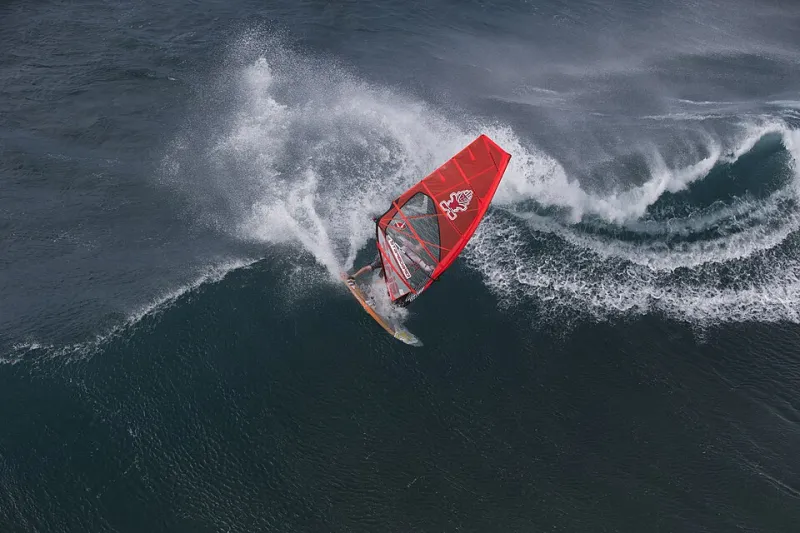
Photo: DeniseMeertens, CC0, via Wikimedia Commons
Let's be honest about something: there are plenty of beautiful places in the world to windsurf. The Canary Islands have their devoted following. Tarifa draws a serious crowd. The Columbia River Gorge is practically a pilgrimage site for Pacific Northwest riders. But when the sport's most accomplished athletes need to know whether a new technique, a new piece of gear, or a new approach to a wave actually works — they come to Maui.
This isn't brand loyalty or tourism marketing. It's a function of geography, meteorology, and something harder to quantify: a culture that has been incubating water sports innovation for decades.
The Conditions That Can't Be Faked
Maui's north shore delivers a combination of wind and wave conditions that simply doesn't exist anywhere else in quite the same way. Ho'okipa Beach Park, the spiritual home of competitive windsurfing, sits in a position where the trade winds funnel down from the mountains and meet the open Pacific swell with a consistency and power that makes it both spectacular and legitimately demanding.
On a good day at Ho'okipa, you're looking at 25-knot trades, head-high to double-overhead waves, and a reef break that punishes mistakes without mercy. That's not a casual afternoon session — that's a proving ground. Gear that performs well there performs well everywhere. Technique that holds up in those conditions is technique you can trust.
For athletes testing equipment — and Neil Pryde's team understood this deeply — there's no substitute for genuine consequence. You can model sail performance in a computer, you can run tank tests and wind tunnel evaluations, but until a design has been through a full-commitment session at Ho'okipa with a skilled rider pushing its limits, you don't actually know what you have.
A Community Built Around Pushing Further
Conditions alone don't make a testing ground. What gives Maui its particular power is the density of elite talent that calls it home, at least part of the year. On any given morning at Ho'okipa's parking lot, you might find yourself standing next to a world champion, a gear designer, a surf photographer, and a teenage local who's already better than most professionals will ever be.
That concentration creates a specific kind of social pressure — the good kind. When you're surrounded by people who are genuinely at the top of the sport, mediocrity doesn't get a lot of encouragement. Riders push each other. Ideas get shared and challenged. Someone tries something new on the water and within hours everyone in the community has an opinion about whether it worked.
This is the environment where windsurfing's technique vocabulary got developed. The moves that are now considered fundamental — high-wind gybes, aerial maneuvers, wave riding lines that use the face of the wave rather than fighting it — were largely worked out here, in real time, by a tight community of people who were obsessed enough to spend every possible hour on the water.
Following in Legendary Footsteps
What's striking about talking to younger athletes who make their way to Maui today is how consciously they're aware of the history they're stepping into. There's a reverence for what happened here — a recognition that the sport they're practicing was substantially shaped on this specific stretch of coastline.
Many of them mention Neil Pryde not just as a sail manufacturer but as a figure who embodied a particular relationship between equipment and place. His work was informed by Maui's conditions. His design priorities reflected what the island's water demanded. That feedback loop between location and innovation is something the current generation is actively trying to continue.
A young rider from California who relocated to Maui's north shore put it plainly in a recent conversation: "I could get good anywhere. But to figure out if I'm actually as good as I think I am, I needed to come here. The water tells you the truth."
That sentiment — Maui as truth-teller — comes up again and again when you talk to athletes across disciplines. Kiteboarding, SUP, big wave surfing: they all have their Maui chapters, and those chapters tend to be the ones where the real breakthroughs happened.
The Island as Incubator
Beyond the conditions and the community, Maui has something that's difficult to articulate but easy to feel when you're there: a culture that takes water sports seriously as a form of creative and athletic expression, not just recreation.
The local community has a long history with the ocean that predates the windsurfing boom by centuries. That relationship with the water informs the way even transplanted athletes approach their craft. There's a respect for the ocean here that shapes how people train, how they think about risk, and how they relate to the environment they're working in.
For equipment designers, that cultural context matters. Gear developed in a place where people genuinely revere the water tends to reflect different priorities than gear designed purely for competitive metrics. It has to be functional, yes — but it also has to feel right. It has to earn its place on the water.
What Makes Maui Irreplaceable
If you're planning a trip to Maui as a windsurfer — whether you're intermediate and looking to level up or experienced and wanting to benchmark yourself against world-class conditions — you're not just visiting a beautiful island. You're participating in a living tradition of innovation and excellence.
The same winds that shaped Neil Pryde's understanding of what a sail needed to do are waiting for you at Ho'okipa. The same community culture that pushed generations of athletes to go further, try harder, and think more creatively about the sport is still operating. The water still tells the truth.
Maui doesn't hand out credentials. It doesn't care about your reputation or your sponsors or how good you looked at your home break. It just presents the conditions, and then you find out who you actually are as a rider.
That's why champions keep coming back. Not because it's comfortable — it rarely is. But because there's nowhere else on the planet where the feedback is quite so honest, quite so immediate, or quite so useful. For anyone serious about windsurfing, that's not a vacation. That's an education.