What the Mainland Is Teaching You Wrong About Windsurfing (And How Maui Fixes It)
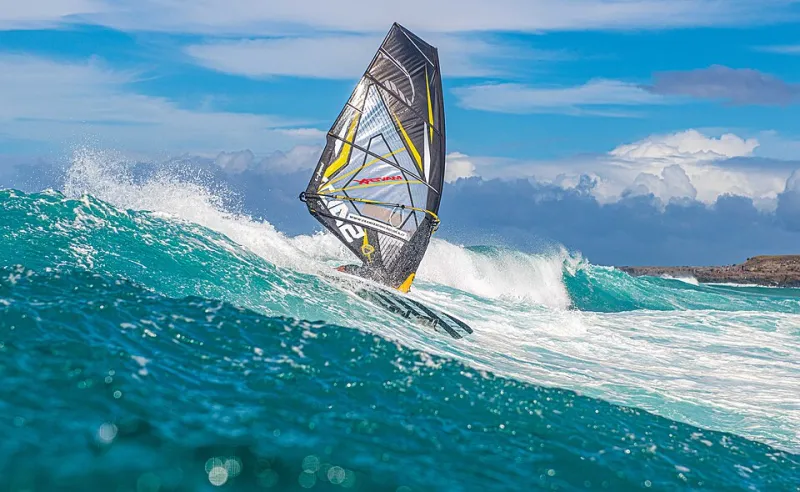
Photo: windsurfer riding ocean waves Maui Hawaii aerial view, via i.pinimg.com
Let's be honest about something: if you've been windsurfing the Columbia River Gorge, the Great Lakes, or the Southern California coast your whole life, you're probably pretty good. You've logged serious hours. You've learned to read thermals, navigate chop, and manage gear in conditions that would send a fair-weather rider straight back to shore. That's not nothing. That's actually a lot.
But here's the thing nobody on the mainland is going to tell you, because most of them haven't been to Maui either: there's a version of this sport you haven't met yet. And once you do, it quietly reorganizes everything you thought you knew.
The Mainland Does a Lot of Things Right
Before we get into what's missing, let's give credit where it's due. The Columbia River Gorge—Hood River especially—produces some of the most technically disciplined windsurfers in the country. The wind there is real, the water is challenging, and the community is tight-knit and serious. California's desert-driven thermals off the Salton Sea and the Bay Area's famous afternoon blasts have shaped riders who know how to handle overpowered conditions with efficiency and calm. The Great Lakes, underrated by almost everyone who hasn't sailed them, teach a particular kind of grit. The chop is short and punishing. The wind shifts without warning. You either adapt fast or you swim a lot.
These are legitimate windsurfing environments, and they produce legitimate windsurfers. No argument there.
But each of these places is, in its own way, a partial picture. The Gorge wind is thermal and directional in a way that rewards a certain style of riding—powerful, straight-line, high-speed—but doesn't ask much of you in terms of reading wave energy or adjusting to swells that arrive from multiple directions simultaneously. California's thermals are often gusty and inconsistent in ways that make riders defensive rather than fluid. The Great Lakes, for all their character, simply don't offer ocean swells. And ocean swells, it turns out, are where a huge portion of windsurfing's deeper skill set actually lives.
What Maui Asks of You That Nowhere Else Does
Maui's north shore—particularly around Ho'okipa—operates on a different logic entirely. The trade winds there are remarkably consistent in direction, which sounds like it would make things simpler. In one sense, it does. But that consistency is layered on top of a wave environment that is anything but simple. You're dealing with open-ocean swells that have traveled thousands of miles before they reach you, hitting a reef system that transforms them in ways that require constant, real-time reading.
The result is that Maui doesn't just test your physical skills. It tests your ability to anticipate—to look at water that's still 40 yards away and make a decision now about what you're going to do when you get there. Riders who've spent their careers on flat or chop-heavy water often arrive at Ho'okipa and feel, for the first time, genuinely behind the ocean. It's humbling. It's also incredibly instructive.
Board selection in Maui also operates differently. The wave boards used on the north shore are shorter and more responsive than what most mainland riders are accustomed to. They're built to pivot, to release off the lip of a wave, to work with the water rather than push through it. If you've been riding a bump-and-jump setup in Hood River your whole life, getting on a proper Maui wave board for the first time feels like switching from a truck to a sports car. The responsiveness is almost disorienting—until it clicks, and then you can't imagine going back.
The Mental Gap Nobody Talks About
There's a psychological dimension to this that doesn't get discussed enough. Mainland windsurfing, particularly in places with gusty or shifting winds, trains riders to be reactive. You're constantly managing instability, constantly compensating for what the conditions are doing to you. That builds reflex and toughness, for sure. But it also trains a certain mental posture: defensive, responsive, catch-up.
Maui's consistent trades flip that posture. When you don't have to fight the wind for your attention, you can redirect that mental energy toward the water itself. Riders who spend time on the island often describe a shift in how they think during a session—less scrambling, more planning. Less reaction, more intention. It's a different relationship with the sport, and it tends to stick with you even when you go back to gustier, less predictable conditions elsewhere.
How to Train Like You're in Maui When You're Not
Okay, so not everyone can just book a flight to Kahului and spend a month at Ho'okipa. Life is real. But there are ways to close the gap, wherever you're riding.
Study wave behavior obsessively, even if your spot doesn't have real waves. Understanding how swells form, how they interact with bottom topography, and how they affect board trim is knowledge that transfers. Even on flat water, you can practice the mental habit of looking ahead and planning your next move rather than just reacting to the present one.
Downsize your board periodically. If you always ride a board that's comfortable and forgiving, you're not developing the sensitivity that smaller, more responsive equipment demands. Spend some sessions on something that challenges your balance and your footwork. It'll feel frustrating before it feels right.
Seek out cross-training in real swell when you can. If you're on the East Coast, there are windows—particularly in fall and winter—when genuine ocean swell shows up on spots from Cape Hatteras to the outer banks of the Carolinas. Those windows are worth chasing. Even a few sessions in real wave energy will accelerate your development in ways that months on flat water can't.
Watch Maui footage with intention. Not just to be inspired, but to study. Watch how riders position themselves relative to the wave before they get there. Watch the board angle on a bottom turn. Watch how the sail trim changes through a maneuver. This is free education, and it's remarkably effective if you approach it like a student rather than a fan.
The Island as a Benchmark
Neil Pryde's connection to Maui was never just geographical. It was philosophical. The island represented a standard—a set of conditions demanding enough to reveal exactly what gear and technique were actually capable of, versus what was just getting by. That standard shaped equipment that worked everywhere, because it was tested somewhere that forgave nothing.
For riders who've never made the trip, Maui functions the same way as a benchmark. You don't have to be there to be shaped by it. Understanding what the island demands—physically, technically, mentally—gives you a map for what to work on wherever you happen to be riding.
And when you do finally get there? You'll know exactly what you came to find.