Shaping by Hand, Shaping by Heart: The Craftspeople Carrying Neil Pryde's Board-Building Vision Forward
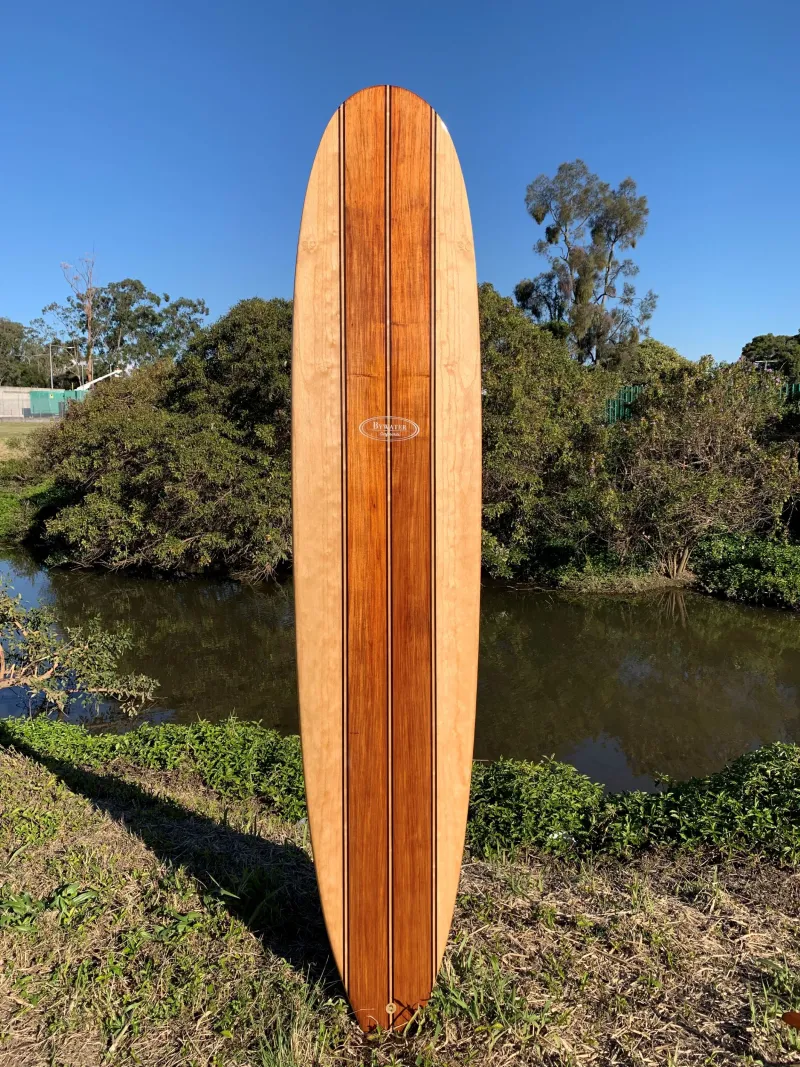
Photo: surfboard shaper workshop foam blank hand tools Hawaii, via images.squarespace-cdn.com
There's a particular smell inside a shaping bay — foam dust, resin, and something harder to name, maybe ambition — that longtime Maui craftspeople know as well as the smell of the ocean itself. Walk into the right workshop on the island and you'll find someone bent over a blank, hand planer humming, chasing a curve that exists first in their imagination and then, slowly, in the foam beneath their fingers. These are the shapers. And in Maui, many of them will tell you, without any hesitation, that Neil Pryde's early design experiments are a direct ancestor of the work they do today.
"You can't talk about modern windsurfing board construction without acknowledging what was figured out here in the '80s," says Kai Hollenbeck, who runs a small shaping operation out of a converted garage in Haiku. "Pryde and the people around him were treating Maui like a testing lab. Every prototype was a question. Every session was data."
That experimental mindset — build it, ride it, break it, rebuild it better — is the thread that connects the legends of Maui's windsurfing golden age to the craftspeople working today.
From Prototype Culture to Production Philosophy
Neil Pryde's influence on equipment didn't stop at sails. His insistence on real-world testing, on putting prototypes in the hands of actual riders in actual conditions, reshaped how the entire industry thought about development. Maui's waters, particularly the legendary chop and wind of Ho'okipa Beach, became the ultimate proving ground.
That culture filtered down. Local shapers who came up during the boom years absorbed the philosophy almost by osmosis. You didn't design a board in a vacuum and ship it to retailers. You shaped it, handed it to someone who knew what they were doing, and watched what happened.
"The feedback loop here is unlike anywhere else," explains Malia Fonoti, who apprenticed under two veteran Maui shapers before opening her own studio near Paia. "You shape something on Monday, it's in the water by Wednesday, and by Friday you know exactly what's wrong with it. That rapid iteration — that's Pryde's fingerprint on how we work."
Fonoti's boards have developed a reputation among serious wave sailors for their responsiveness in cross-shore conditions, a characteristic she traces directly to lessons learned studying the geometry of older Maui-shaped designs from the late '80s and early '90s.
Inside the Workshop: Where Old Methods Meet New Materials
Step inside a working Maui shaping bay and the blend of tradition and innovation is immediately visible. Hand tools hang alongside CNC machine readouts. Foam blanks sit stacked next to rolls of carbon fiber. The shapers here aren't purists in the nostalgic sense — they're not interested in doing things the hard way just for the sake of it. But they're deeply skeptical of anything that removes the craftsperson's judgment from the equation.
"The machine can cut a shape faster than I can," admits Derek Souza, who has been shaping boards on Maui for nearly twenty years. "But it can't feel whether the rocker is right. It can't look at a blank and decide, based on everything it knows about how water moves at Ho'okipa, that this concave needs to be two millimeters shallower. That's still a human call."
Souza keeps a collection of older boards in his shop — some of them dating back to the early experimental era — not as museum pieces but as reference points. He'll pull one down, run his hands along the rails, and use it to explain to his apprentices why a particular decision was made. The boards become a kind of physical archive, a way of transmitting knowledge that doesn't translate easily to written specs.
Teaching the Next Generation to Think, Not Just Shape
The mentorship happening inside these workshops goes beyond technique. The shapers who trace their lineage back to Pryde's era are trying to pass on something harder to quantify: a problem-solving instinct, a willingness to treat every board as a hypothesis.
"I tell my apprentices the same thing I was told," says Fonoti. "You're not making a product. You're asking a question. The ocean answers it. Your job is to listen."
That philosophy shows up in how these workshops train new shapers. Rather than drilling a standard template and calling it done, mentors push apprentices to understand why each design decision exists — why a particular tail shape behaves differently in steep overhead surf versus mushy knee-high chop, why rail thickness affects not just buoyancy but the feel of a rail-to-rail transition.
Souza runs informal sessions where he'll shape a board deliberately wrong — exaggerating a flaw — and ask his apprentices to diagnose the problem before they ever see it in the water. "Neil Pryde's people were doing that kind of thinking in real time, on the fly, with prototypes that sometimes fell apart mid-session. I want my guys to have that same instinct."
Innovation Within a Legacy
What's striking about Maui's contemporary shaping community is that reverence for the past hasn't calcified into imitation. The shapers working today are experimenting with materials and construction methods that simply didn't exist when Pryde's early collaborators were working — bio-resins, recycled foam cores, hybrid carbon-glass layups that shave weight without sacrificing durability.
Hollenbeck has been experimenting with a construction method that uses a significantly reduced resin volume, cutting the environmental footprint of each board while actually improving flex characteristics. "The old-timers were constrained by what existed," he says. "We're not. But the questions we're asking are the same ones they were asking. How does this shape interact with this specific kind of water? That question doesn't change."
The boards coming out of these Maui workshops aren't mass-market products. They're made in small batches, sometimes one at a time, for riders who understand what they're getting: a piece of equipment shaped by someone who has spent thousands of hours studying the same water Neil Pryde's circle used to define what modern windsurfing equipment could be.
That's not nostalgia. That's a living tradition — and on Maui, it's as healthy as it's ever been.